Stress has a way of showing up everywhere—stiff shoulders, achy joints, low energy, restless sleep, and even skin that looks a little duller than usual. The good news: modern wellness care is increasingly focused on supporting recovery, not just pushing through discomfort. One of the most talked-about tools right now is red light therapy—a non-invasive approach that uses specific wavelengths of light to support the body’s natural repair processes.
And if you’ve found yourself typing “red light therapy near me” into a search bar, you’re not alone. People are looking for options that feel relaxing, require no downtime, and can complement chiropractic care, fitness routines, and healthy skincare.
At Vitruvian Wellness Center in West Springfield, MA, red-light-related services are offered under photobiomodulation (PBM)—including both a targeted medical laser and a full‑body light therapy bed. This article breaks down what red light therapy is, what science says it can realistically help with, and what to look for when choosing a provider.
What Is Red Light Therapy (Photobiomodulation)?
“Red light therapy” is a popular name for a clinical category often called photobiomodulation (PBM) or low-level light/laser therapy. PBM uses visible red and near‑infrared (NIR) wavelengths—commonly within a range described as an “optical window” that can penetrate tissue more effectively than many other wavelengths.
Unlike UV light from the sun or tanning beds, PBM is not intended to damage skin. Instead, PBM is studied for how light energy can trigger helpful cellular signaling—especially in mitochondria (the “energy centers” of cells).
How it may work inside the body
The most widely cited mechanism involves cytochrome c oxidase in the mitochondrial respiratory chain. In simple terms: red/NIR photons can influence mitochondrial function and cell signaling. Researchers describe pathways involving nitric oxide signaling, changes in ATP production, oxidative stress modulation, and downstream gene expression.
Just as important: PBM is dose-dependent. Many PBM researchers describe a biphasic response where the right dose can help, but too much (or too little) may reduce benefits. That’s why professional protocols matter.
Why Stress Shows Up on Your Skin and in Your Body
When you’re under stress, your body often shifts into a “protect and power through” mode—muscles tighten, sleep can get lighter, and recovery from workouts or injuries may feel slower. Over time, that can affect posture, mobility, and how energetic you feel day-to-day. (This is one reason wellness plans often combine movement, manual care, and recovery-support therapies.)
Skin can also reflect this “recovery debt.” While skincare products matter, many people notice that their best “glow” shows up when sleep improves, inflammation settles, and tension decreases. That’s where red light therapy becomes interesting: it’s studied for both tissue support (pain/inflammation) and skin/photoaging outcomes.
Evidence-Based Benefits of Red Light Therapy
Red light therapy is widely marketed, but the most helpful approach is to separate: (1) areas with solid clinical support, (2) areas with promising-but-early evidence, and (3) claims that need cautious wording.
1. Pain relief and improved function (especially in some joint/tendon problems)
Clinical evidence is strongest when PBM is used with condition-specific parameters and a consistent schedule.
For example, a 2024 systematic review/network meta-analysis evaluated low-level laser/light therapy parameters for knee osteoarthritis and reported improvements versus sham under certain parameter sets—suggesting that wavelength and protocol choices matter. Similarly, a 2022 systematic review/meta-analysis found low-level laser therapy reduced pain and disability for lower extremity tendinopathy and plantar fasciitis in the short to medium term.
What this means in real life: for many people, PBM isn’t a one-and-done. It’s more like physical training—benefits tend to be cumulative when you stick with a plan and reassess progress.
2. Reduced inflammation signaling (a common pathway behind “feels better”)
Many PBM explanations ultimately tie back to the relationship between mitochondrial function and inflammatory signaling. Mechanistic reviews describe how PBM can influence cellular metabolism and downstream signaling relevant to inflammation and repair. That doesn’t mean PBM “cures inflammation,” but it supports why some people report less stiffness and easier movement as the treatment series progresses.
3. Skin tone, texture, and “glow” (photoaging support)
If your goal is “shine,” dermatology trials are encouraging—especially for texture and fine lines when red/NIR protocols are used consistently.
A randomized split-face trial concluded 633 nm + 830 nm LED phototherapy was effective for skin rejuvenation measures and well tolerated. Another study reported significant wrinkle improvements and microscopy findings consistent with collagen changes after combined red/NIR LED treatments. Controlled trials have also reported improvements in patient satisfaction and collagen density-related outcomes with red/NIR protocols.
The practical takeaway: red light therapy is not an overnight filter—but it can support gradual improvements when paired with good skincare basics (sun protection, hydration, appropriate actives) and consistent sessions.
4. Sleep, relaxation, and mood support (emerging evidence; frame carefully)
Some clinics (including Vitruvian’s own service page) position whole-body PBM as relaxing and supportive of sleep quality. The research here is growing, with reviews discussing PBM’s potential role in sleep domains and studies exploring whole-body PBM effects.
At the same time, evidence summaries often emphasize limitations: small samples, mixed protocols, and the need for more rigorous trials—especially for mood outcomes. If you’re pursuing red light therapy for stress and sleep, the most evidence-aligned mindset is: supportive wellness tool, not a standalone treatment for insomnia, anxiety, or depression.
What to Expect in a Professional Red Light Therapy Session
One reason people search “red light therapy near me” instead of buying a device is that professional settings can offer stronger customization, safer oversight, and better consistency—especially when you’re dealing with pain or complex medical history.
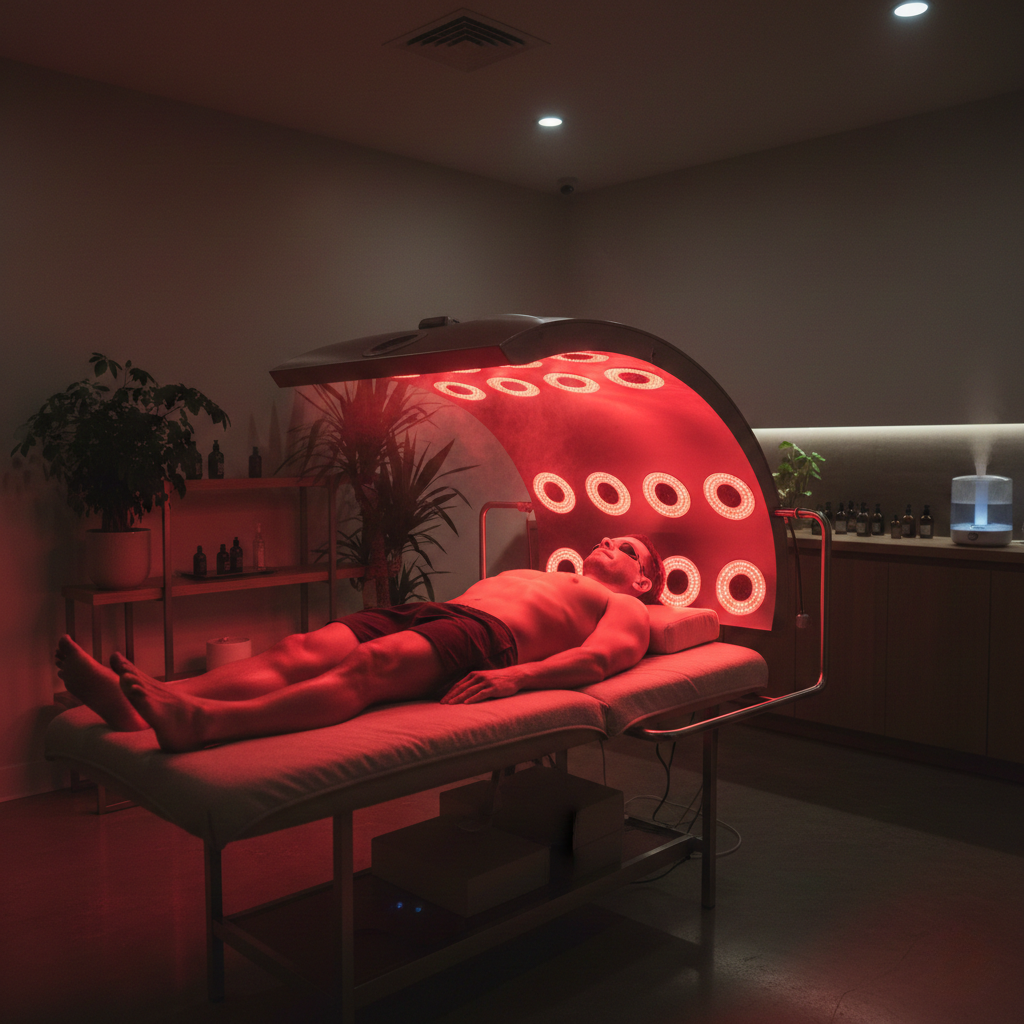
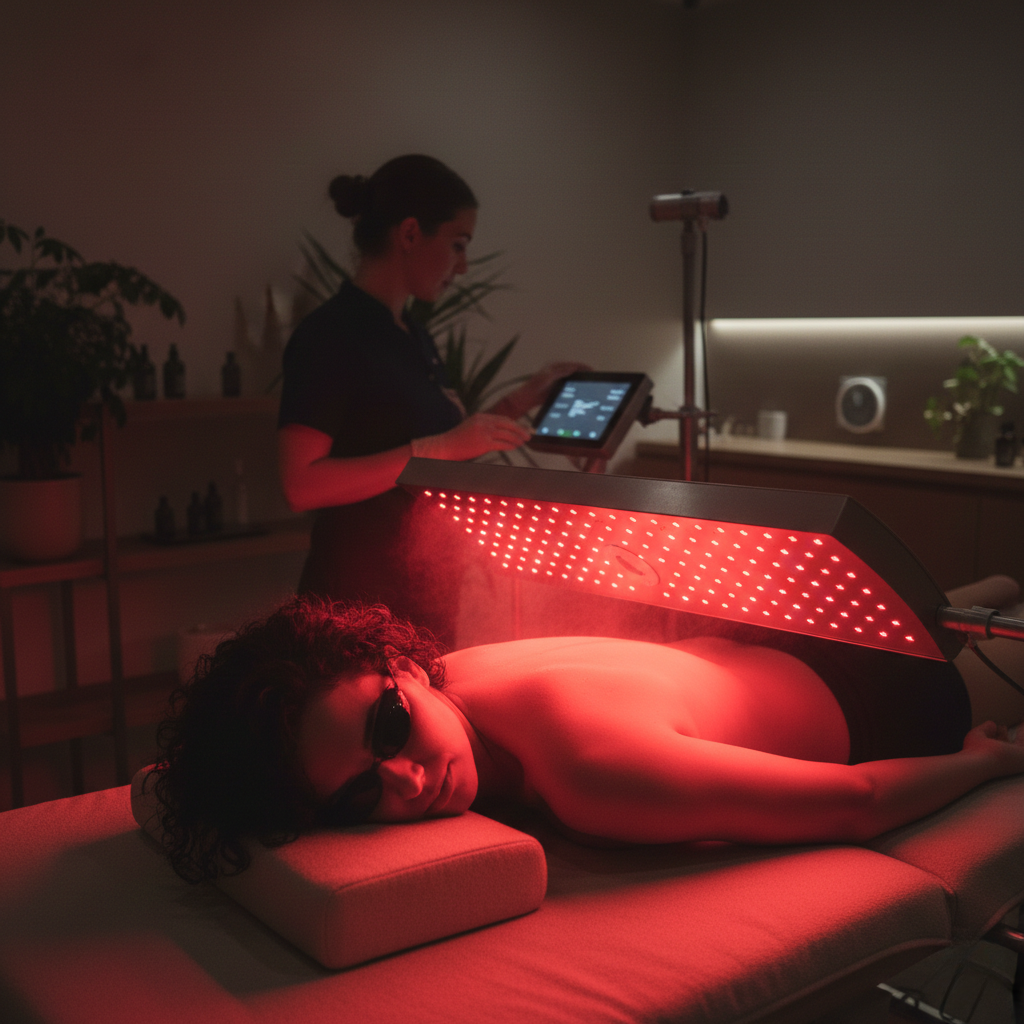
At Vitruvian Wellness Center, the light-based options described include:
- A targeted medical laser session approach (often used for localized pain, stiffness, mobility limits).
- A full-body light therapy bed for systemic wellness/recovery goals.
While the clinic website does not specify exact session lengths or recommended series for these services, the Vita bed manufacturer describes protocols that can support recovery in sessions “as little as 15 minutes,” and lists multiple wavelengths in the device design. (In practice, your session length and frequency should be individualized.)
A typical plan often includes:
- A brief intake (goals + medical screening)
- A starting schedule (commonly multiple sessions per week early on)
- Reassessment after a short series to decide whether to continue, adjust, or maintain.
Safety, Side Effects, and Who Should Avoid Red Light Therapy
Red light therapy is generally described as well tolerated when used correctly, but “safe” doesn’t mean “for everyone, in every context.”
Vitruvian’s own consent forms and service page highlight several important precautions:
- Protect your eyes:Tthe consent forms explicitly warn about retinal risk and instruct patients to use provided protective eyewear.
- Pregnancy: Listed as ineligible/not recommended (a common conservative screening choice in many clinics due to limited controlled data).
- Cancer/tumors: The clinic materials caution against use with malignant tumors/active cancerous lesions; oncology-focused reviews discuss PBM safety questions and ongoing research, supporting cautious screening and clinician oversight.
- Photosensitivity & photosensitizing medications: Screening is important (the Vita bed consent explicitly references this).
- Seizure history: whole-body systems may use flashing/pulsing modes; the consent form flags seizure history as a contraindication.
If you’re taking medications known to increase light sensitivity, have a seizure disorder, are pregnant, or have an active cancer diagnosis, you should speak with a licensed clinician before starting.
Red Light Therapy Near Me—How to Choose the Right Provider
When people search “red light therapy near me,” they’re usually looking for two things: convenience and confidence. Here are practical, evidence-aligned questions to ask:
- What device type do you use (LED panel/bed vs medical laser), and why? Different formats suit different goals.
- Do you screen for contraindications (photosensitivity, pregnancy, seizure history, cancer considerations)? This is a safety hallmark.
- Do you offer a plan (series + reassessment), not just standalone sessions? PBM often performs best as a consistent protocol.
- Can you explain expected timelines honestly? Skin and pain outcomes are usually gradual and dose-dependent.
- Do they connect the therapy to a bigger plan? For pain, pairing PBM with movement, manual care, and rehab often makes practical sense.
Why Choose Vitruvian Wellness Center in West Springfield
Vitruvian’s site highlights a care philosophy centered on individualized plans and patient education. For red light therapy seekers, the standout is that the clinic advertises both:
- a targeted laser option, and
- a whole-body light bed option,
both framed under photobiomodulation.
If you’re in or near West Springfield and want a non-invasive way to support pain relief, recovery, and skin health—this combination can be a practical advantage because it allows care to be tailored to your goals (localized vs full-body).
FAQs
1) How many red light therapy sessions do I need?
It depends on your goal and the condition being addressed, but many protocols are series-based (multiple sessions/week over several weeks) with reassessment.
2) How long does a session take?
Session length varies by device and protocol. Some whole-body systems are marketed around short sessions (e.g., ~15 minutes), while targeted protocols may vary. Your provider should guide this.
3) Is red light therapy safe for everyone?
No. Screening matters—especially for pregnancy, active cancer/tumor concerns, photosensitivity/photosensitizing medications, and seizure history (particularly for flashing/pulsed systems).
4) Does red light therapy help with wrinkles and skin glow?
Controlled studies using red/NIR LED protocols (e.g., 633 nm + 830 nm) have reported improvements in wrinkles/texture and related measures, typically with consistent use over weeks.
5) I’m searching “red light therapy near me”—what should I prioritize?
Prioritize safety screening, device transparency, protocol clarity, and honest expectations. Avoid providers who promise guaranteed cures or use vague “FDA registered” language as a quality signal without explaining what it means.
If you’re ready to explore whether red light therapy (photobiomodulation) fits your goals—whether that’s easing stubborn pain, supporting workout recovery, or helping your skin look more refreshed—schedule a consultation with Vitruvian Wellness Center.
Vitruvian Wellness Center
https://maps.app.goo.gl/hzLqHvgTWDz5xawx8
425 Union Street, West Springfield, MA 01089, United States
(413) 734-6245
https://vitruvianwellnessctr.com/
Medical note: This article is for educational purposes and does not replace personalized medical advice. If you have a medical condition, take prescription medications, are pregnant, or have cancer-related concerns, consult a licensed healthcare professional before starting light-based therapy.